
Inside the Death Row Shoestring Attack: How Christa Pike Targeted Inmate Patricia Jones

 The Victim
The violent altercation occurred inside a temporary recreation enclosure during a prison evacuation.
AI-generated summary. Quality and accuracy may vary.
A photograph depicts Tennessee death row inmate Christa Pike, who was convicted of attempted murder following a 2001 incident at Debra K Johnson Rehabilitation Center. The image presents Pike, who remains confined in the state correctional facility.
- Christa Pike received an additional 25-year sentence for attempting to strangle inmate Patricia Jones with a shoestring.
- The confrontation occurred on August 24, 2001, after inmates were moved to a temporary recreation cage during an evacuation.
- An appellate court upheld Pike's attempted first-degree murder conviction after an intercepted phone call showed premeditation.
Pike received the sentence for attempting to strangle fellow inmate Patricia Jones with a shoestring during an emergency evacuation. Although Pike claimed she acted to protect another inmate, an intercepted phone call revealed the assault was premeditated.
Was this useful? Share your thoughts in the comments
 Hot right now
Christa Pike Skull Fragment Trophy: The Chilling Evidence Behind Tennessee’s Death Row Inmate
Hot right now
Christa Pike Skull Fragment Trophy: The Chilling Evidence Behind Tennessee’s Death Row Inmate
Tennessee death row inmate Christa Pike received an additional 25-year sentence after attempting to strangle fellow inmate Patricia Jones with a shoestring during an emergency prison evacuation. The near-fatal confrontation took place on August 24, 2001, inside the Debra K Johnson Rehabilitation Center, demonstrating that Pike’s history of extreme violence continued long after her initial capital conviction.
Pike had already secured a place on death row following her March 30, 1996, conviction for the torture and murder of 19-year-old Colleen Slemmer, an attack carried out alongside Tadaryl Shipp. Decades later, Pike survived a failed lethal injection execution attempt, yet state records show that her institutional record had already been defined by severe felony violence behind bars.
The assault inside the state facility revealed how volatile emergency movements can become when high-security prisoners are brought into close proximity.
The Recreation Cage Confrontation at Debra K Johnson Rehabilitation Center

The incident began during an unexpected fire-related evacuation of the prison cells. Correctional staff moved inmates into a temporary recreation cell, placing multiple violent offenders in the same secure pen.
Confined together in the enclosure were Pike, Patricia Jones, and fellow inmate Natasha Cornett. At the time, Jones was already serving a life sentence for the 1994 murder of 84-year-old Alberta Coker.
The Evacuation and Escalation
An argument erupted almost immediately after the three women were placed together in the recreation cage. Jones testified that Cornett attempted to swing at her but missed completely. As Jones shifted her stance to engage Cornett, Pike closed in from behind.
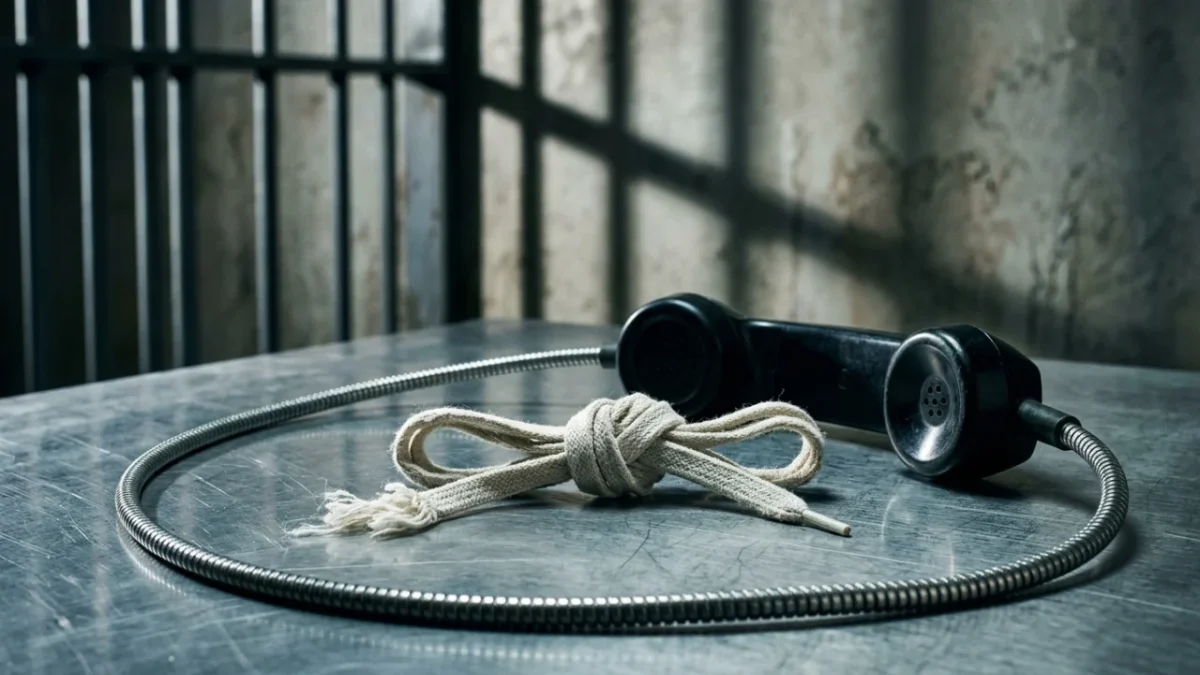
Using a shoestring, Pike wrapped the cord around Jones’s neck and attempted to strangle her. The violent ambush resulted in Pike being formally charged with attempted first-degree murder by state prosecutors.
Defense Claims Versus the Recorded Phone Confession
A widespread misconception surrounding the altercation suggested Pike acted instinctively purely to shield Cornett from being assaulted by Jones. During subsequent legal proceedings, Pike insisted her sole motive was defense, and Jones even testified later that Pike had intervened and likely saved the other woman’s life.
Official appeal records dismantled that self-defense narrative through physical evidence and Pike’s own direct statements. State prosecutors presented audio from an intercepted telephone call between Pike and her mother that contradicted any claim of an accidental or purely protective fight.
“Premeditated the hell out of this.”
Judges reviewing Pike’s appeal determined that while her stated goal was protecting Cornett, her actual conduct and recorded admissions showed intentional planning. The appellate court upheld the conviction, leaving the additional 25-year sentence to run concurrently with her existing death sentence.
Key Case Facts and Timeline

| Detail | Case Specifics |
|---|---|
| Primary Offender | Christa Pike (Sentenced to death in 1996; additional 25 years for attempted murder) |
| Target Inmate | Patricia Jones (Serving life for the 1994 murder of Alberta Coker) |
| Third Party Involved | Natasha Cornett |
| Incident Date | August 24, 2001 |
| Facility Location | Debra K Johnson Rehabilitation Center, Tennessee |
| Weapon Utilized | Shoestring |
| Legal Outcome | Conviction for attempted first-degree murder upheld on appeal |
💡 Emergency relocations inside maximum-security environments create severe operational challenges when high-risk individuals are corralled into shared spaces.
🔍 Recorded prison telephone admissions played the definitive role in disproving claims of spontaneous defense during appellate reviews.
📌 Pike remains one of the most closely scrutinized figures in state correctional history due to severe crimes committed both before and after entering death row.
👇 Leave your thoughts in the comments below on how institutional security handles high-profile death row conflicts.