
Colleen Slemmer Story: The True Crime Case Behind TV Dramatizations

 The Victim
The 1995 murder of Colleen Slemmer remains one of the most closely followed true-crime cases in television history.
- Christa Pike was convicted of the 1995 murder of Colleen Slemmer and became the only woman on death row in Tennessee.
- Pike survived a September 30 execution attempt involving two doses of pentobarbital and was hospitalized with injuries.
- Despite widespread rumors, the crime was never adapted into a scripted Lifetime movie and only appears in docuseries.
No, there is no dedicated scripted Lifetime movie about the case. It has only been featured in investigative docuseries, crime profiles, and documentary reenactments.
Was this useful? Share your thoughts in the comments
 Hot right now
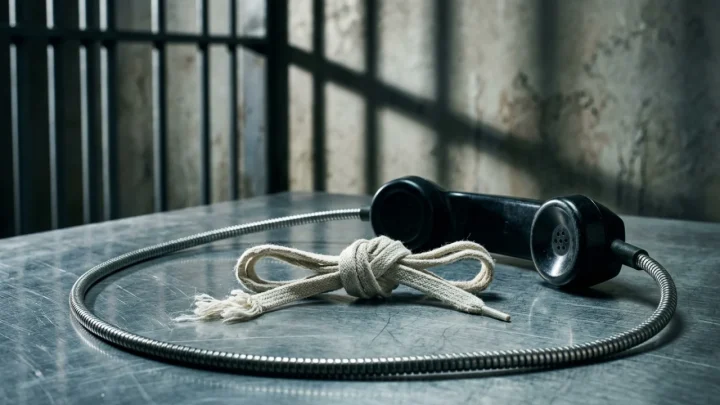
Inside the Death Row Shoestring Attack: How Christa Pike Targeted Inmate Patricia Jones
The tragic 1995 murder of Colleen Slemmer continues to draw intense public interest across true-crime television and home media releases, yet widespread rumors of a dedicated scripted Lifetime movie often blur the line between cable docudramas and reality. While television networks have repeatedly profiled the Knoxville crime, viewers searching for a fictionalized feature film often conflate true-crime investigative episodes and home video releases with traditional made-for-TV movies.
The intense fascination surrounding the case stems directly from the shocking details of Slemmer’s death and the legal history of her convicted killer, Christa Pike. Pike was convicted of murdering her 19-year-old classmate in 1995 and became the only woman on death row in Tennessee. Decades after the trial, the narrative continues to provoke national debate regarding capital punishment, media ethics, and victim remembrance.
Untangling True-Crime Dramas From Fictional TV Adaptations

Audiences routinely turn to cable networks and streaming catalogs searching for a scripted Colleen Slemmer television movie. The case has been examined across various investigative formats, documentary series, and syndicated crime specials, many of which are preserved in physical media catalogs such as Blu-ray.com listings. However, viewers frequently mistake dramatic documentary reenactments for standalone network feature films.
“Where am I and who are you?”
That disorientation emerged not from a Hollywood script, but from real life when Pike regained consciousness after a high-profile legal turn. Her attorney, Randy Spivey, confirmed those were her first words upon waking up in a Nashville hospital. Dramatic moments such as this often fuel television production pitches, yet major networks face strict ethical hurdles when translating severe, real-life violence into scripted entertainment.
The Realities of Cable Crime Dramatizations
Networks that specialize in true-crime storytelling typically rely on structured documentary journalism rather than scripted drama. Several distinct differences separate factual docuseries from dramatized television features:
- Source Material Adherence: Documentary specials rely on trial transcripts, preserved court evidence, and law enforcement testimony rather than speculative scripts.
- Format Boundaries: Fictional adaptations often compress timelines and invent composite characters, whereas serialized cable profiles focus on verifiable investigative milestones.
- Distribution and Physical Archives: Independent documentary segments frequently enter home release distribution, appearing on physical media platforms rather than as singular television broadcast premieres.
The 1995 Murder and the Legal Legacy of Christa Pike
The criminal case began in 1995 when Slemmer was killed by Pike, who was a classmate at the time. The severity of the crime led to Pike’s conviction and death sentence, placing her in a rare legal category. She became the only woman sentenced to death row in Tennessee, facing the prospect of becoming the first woman executed by the state in more than 200 years.
The ongoing coverage of the case recently entered an unprecedented phase following legal proceedings in Nashville. After receiving two doses of pentobarbital during an execution attempt on the night of Sept. 30, Pike survived the procedure. She remained hospitalized, intubated, and placed on a ventilator before regaining consciousness days later with burns and arm injuries, remaining shackled to her hospital bed.
A judge subsequently ordered state prison officials to preserve all evidence connected to the execution attempt. The physical aftermath has prompted intense scrutiny from legal authorities over whether the state can legally attempt a second execution under constitutional protections.
Fact vs. Fiction in the Colleen Slemmer Narrative

Misconceptions surrounding the legal status and television footprint of the case remain widespread on social platforms and true-crime forums.
| Common Assumption | Verified Reality |
|---|---|
| A dedicated scripted Lifetime original movie dramatizes the case. | The murder has been featured in investigative docuseries and crime profiles, but not as a fictionalized Lifetime film. |
| Christa Pike’s capital case was resolved decades ago. | Pike remains hospitalized under court review following a botched execution attempt on Sept. 30 involving pentobarbital. |
| Tennessee regularly carries out executions of female inmates. | No woman has been executed in Tennessee in more than two centuries, making the Pike case historically unique. |
| The execution protocol was completed without complication. | Pike survived two doses of pentobarbital, leading a judge to order the preservation of execution evidence. |
The distinction between verified facts and dramatized speculation is essential when examining sensitive criminal cases. While television retellings ensure the memory of Colleen Slemmer is not forgotten, the reality of the Tennessee courtroom remains far more complex than any televised drama.
💡 The intersection of criminal justice and media portrayal continues to shape how high-profile cases are remembered by the public.
🔍 Follow closely as judicial authorities review the evidence from the Tennessee Department of Correction.
👇 Leave your thoughts in the comments below about how true-crime media should balance victim advocacy with dramatic storytelling.