
Inside Christa Pike’s Tennessee Death Row Cell Confinement After Halted Execution

 Trial & Death Row
- Christa Pike survived a halted execution after receiving two lethal doses of pentobarbital at Riverbend Maximum Security Institution.
- Pike returned to single-cell confinement where inmates remain locked inside their secure units for up to 23 hours a day.
- Tennessee Governor Bill Lee ordered an administrative review into the state's execution operations following the halted procedure.
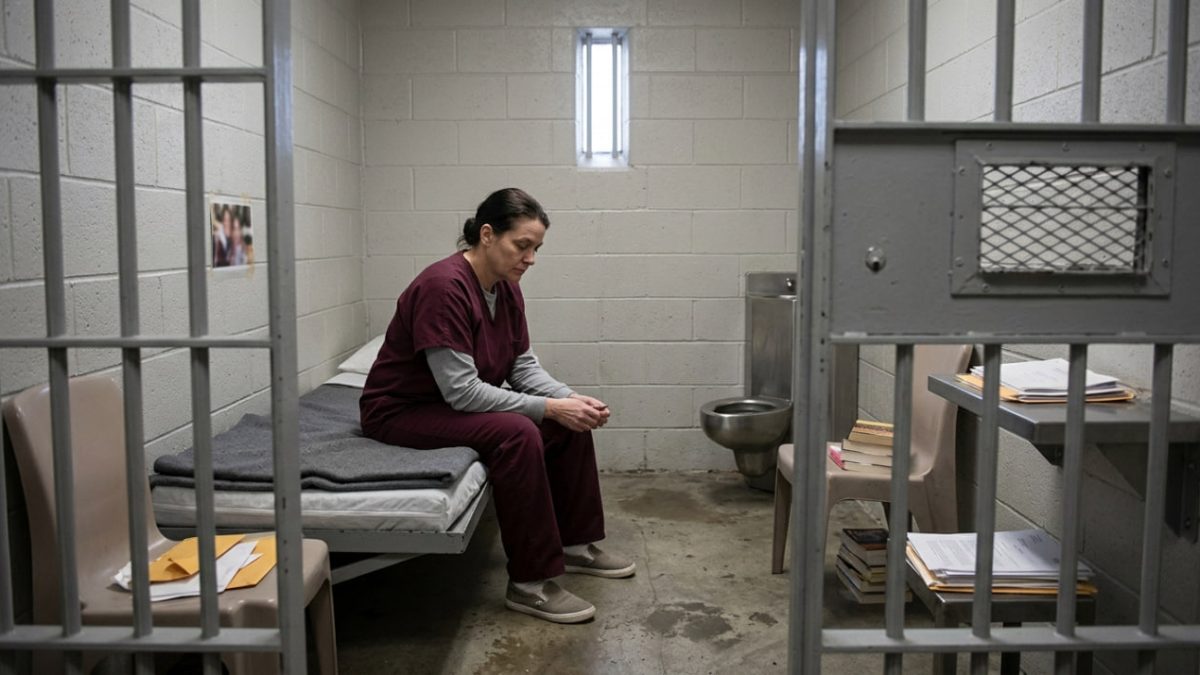
Pike returned to single-cell isolation at Riverbend Maximum Security Institution under standard maximum-security monitoring. She remains confined while state officials conduct an administrative review of execution operations.
Was this useful? Share your thoughts in the comments
 Hot right now
Christa Pike Execution Survived: Why the Electric Chair Is Now Under Debate
Inside Tennessee’s maximum-security custody, Christa Pike remains confined to strict single-cell housing at Riverbend Maximum Security Institution after surviving a halted execution where officials administered two lethal doses of pentobarbital. At 50 years old, Pike regained consciousness and resumed speaking while isolated inside her secure unit, thrusting state correctional protocols into uncharted legal territory.
Pike, originally condemned to death for the 1995 torture and murder of 19-year-old Colleen Slemmer, spent decades in continuous confinement under Tennessee’s capital punishment regime. Her survival after receiving chemical execution drugs has intensified public focus on the physical conditions, daily restrictions, and procedural realities that define her death row cell confinement.
Surviving a lethal injection attempt is an extraordinarily rare event that completely alters an inmate’s daily existence behind prison walls.
Inside High-Security Death Row Cell Confinement in Tennessee
Capital punishment housing in Tennessee enforces strict single-occupancy isolation designed for continuous monitoring and heightened institutional control. Pike’s assignment to high-security death row housing isolates her from general population living quarters, restricting movement to tightly scheduled, solitary intervals.
In standard maximum-security death row units across state facilities, cell layouts prioritize physical containment above all else. Inmates spend the overwhelming majority of each 24-hour cycle inside their secure rooms, which contain integrated steel plumbing fixtures, a stationary bed platform, and secure entry doors configured for monitored meal tray pass-throughs.
These architectural barriers limit direct human contact to brief interactions with correctional officers, medical personnel, and legal counsel during authorized visits.
Capital housing protocols and execution chamber management face unprecedented legal scrutiny when lethal injection procedures fail midway through drug administration.
Daily Protocols and Security Mandates for Condemned Inmates
Living under capital sentence status requires constant compliance with high-risk supervision guidelines. Tennessee Department of Correction facilities enforce rigid operational parameters to maintain facility security around death-sentenced individuals.
- Constant Cell Confinement: Inmates remain locked inside their designated cells for up to 23 hours a day, depending on operational and security schedules.
- Restricted Outdoor Recreation: Exercise occurs in individual security cages or segregated outdoor areas without physical contact with other prisoners.
- Monitored Movement: Any transfer outside the cell requires full physical restraints, including handcuffs, waist chains, and direct escort by multiple correctional officers.
- Direct Medical Supervision: Vital signs, psychological stability, and ongoing physical health undergo consistent checks through cell-front observations.
These intense isolation procedures shape every hour of daily existence, yet widespread misconceptions often distort how death row confinement actually works.
Myth vs. Reality: Surviving a Halted Execution
A persistent public misconception suggests that if an execution attempt fails, the prisoner is legally entitled to immediate freedom, a commuted sentence, or relaxed custody standards. Legal reality proves entirely different. Inmates who leave the chamber alive return immediately to maximum-security isolation while courts and state officials debate next steps.
Historical precedent across multiple state jurisdictions shows that an aborted lethal injection does not dissolve a capital sentence. According to records tracked by the Death Penalty Information Center, at least eight condemned prisoners nationwide have left an execution chamber alive due to procedural failures.
Precedent Across State Corrections Systems
Other states have confronted similar crises when vein access collapsed or procedures stalled. In Alabama, officials halted the lethal injection of Doyle Lee Hamm after failing to establish an intravenous line, requiring officers to carry him back to his cell where he remained until dying of natural causes. Alabama also failed in an attempt to execute Alan Eugene Miller before eventually carrying out his sentence two years later using nitrogen gas.
Tennessee itself halted the scheduled lethal injection of Tony Carruthers when executioners spent over an hour attempting without success to establish secondary intravenous access. Tennessee Governor Bill Lee subsequently ordered an operational pause, leaving Carruthers in his death row cell while procedures underwent state review.
| Jurisdiction & Case | Execution Chamber Outcome |
|---|---|
| Christa Pike (Tennessee) | Consciousness regained after two doses of pentobarbital; returned to custody pending state review. |
| Tony Carruthers (Tennessee) | Halted after medical personnel failed to secure required backup intravenous line. |
| Thomas Eugene Creech (Idaho) | Called off after eight failed vein access attempts across arms, legs, and feet. |
| Alan Eugene Miller (Alabama) | Halted after prolonged catheter insertion failures; executed two years later with nitrogen gas. |
| Romell Broom (Ohio) | Called off after two hours and 18 needle sticks; died years later in prison from medical complications. |
Unlike cases where line access failed before drug administration began, Pike represents the only documented instance where a prisoner survived after receiving lethal chemical doses inside the chamber.
Legal Scrutiny and Future Confinement at Riverbend
Following the halted procedure, Governor Bill Lee ordered an administrative review into the state’s execution operations. The review focuses on drug handling, medical execution protocols, and equipment performance inside Riverbend Maximum Security Institution.
Defense attorneys routinely challenge attempts to schedule secondary execution dates, arguing that subjecting an inmate to repeated lethal processes constitutes unconstitutional treatment. As legal teams prepare complex motions, Pike remains isolated inside her christa pike death row quarters under standard maximum-security monitoring.
Her ongoing confinement underscores the unresolved friction between state death penalty execution protocols and constitutional protections against cruel and unusual punishment.
💡 The legal battles surrounding botched executions and prolonged solitary confinement continue to challenge state correctional policies nationwide.
🔍 What are your thoughts on how states should handle death row confinement after a failed execution?
👇 Leave your thoughts in the comments below and share your perspective on this unfolding legal debate.