
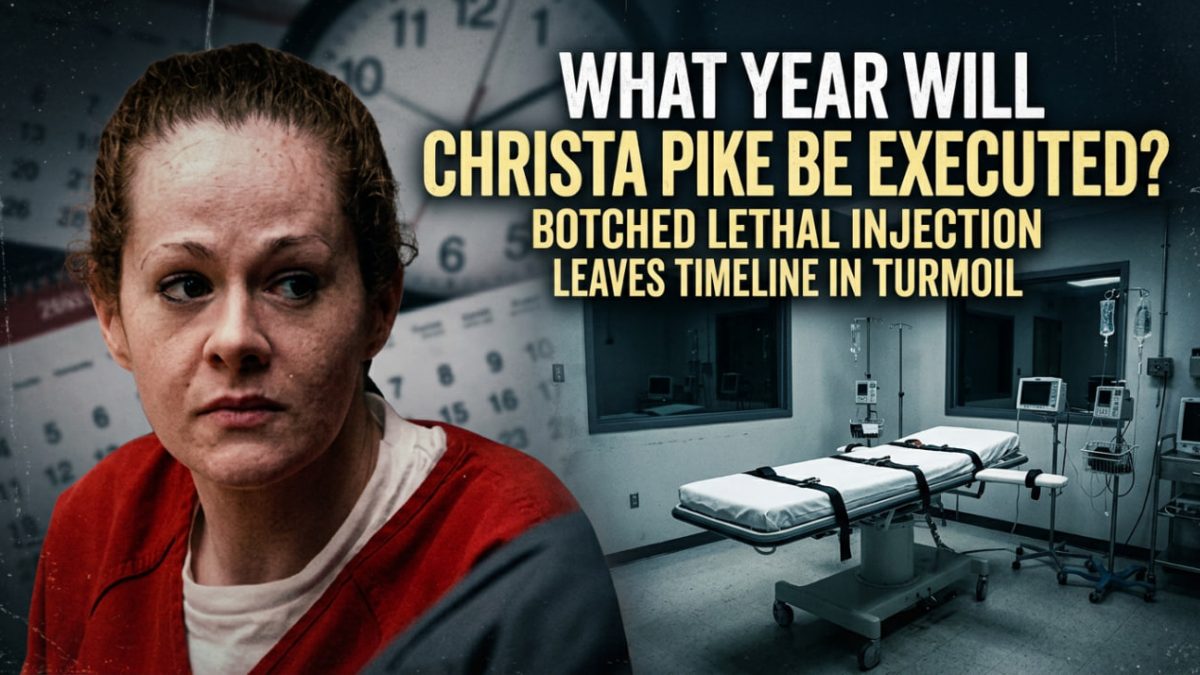
What Year Will Christa Pike Be Executed? Botched Lethal Injection Leaves Timeline in Turmoil

 Latest Updates & Appeals
- Christa Pike survived a botched lethal injection on September 30 after receiving two full doses of pentobarbital.
- Tennessee's governor issued a temporary capital punishment moratorium while an independent review investigates the failure.
- Pike's execution date is on indefinite hold as her attorneys mount Eighth Amendment challenges against a second attempt.
Christa Pike has no confirmed execution date or year, and any future execution is on indefinite hold. Tennessee is under an emergency moratorium while protocol investigations and constitutional legal challenges proceed.
Was this useful? Share your thoughts in the comments
 Hot right now
The Brutal Weaponry Used Against Colleen Slemmer in Infamous Knoxville Murder
Christa Pike has no confirmed execution year after surviving a botched lethal injection on September 30, leaving any future execution date on indefinite hold while Tennessee operates under an emergency moratorium and an unprecedented constitutional legal battle.
The 50-year-old death row inmate survived two lethal doses of the barbiturate pentobarbital inside the execution chamber. Hospitalized in Nashville after falling unconscious and requiring intubation for nearly a week, Pike is now awake, talking, and walking with assistance, but her survival has upended the state’s capital punishment schedule.
State officials are now blocked from establishing a new calendar for her death sentence while internal investigations and federal constitutional challenges move forward. The immediate question is no longer which year her execution will take place, but whether the state can legally execute her at all.
The Botched Lethal Injection and the Tennessee Moratorium
Tennessee state officials attempted to carry out Pike’s death sentence on September 30 using high-dose pentobarbital. Weeks prior to the scheduled date, Pike had requested execution by hanging, expressing severe fear over the lethal injection chemical.
“The drug supposedly burns very bad. And so that sounds scary to me because they used the word Draino in speaking about this drug, and the thought of suffocating and drowning on my own bodily fluid and blood isn’t very appealing to me.”
Her request for hanging was rejected by authorities. During the procedure, witnesses reported hearing Pike express severe pain in her arm, stating that it felt as though it were about to burst. Despite receiving two complete lethal doses, she did not succumb to the drug.
Following her survival, the governor instituted a temporary statewide moratorium on capital punishment while an independent review assesses the systemic failures of the protocol. Similar vascular access issues occurred months earlier in May, when prison staff spent over an hour attempting to place IV lines in condemned prisoner Tony Carruthers before abandoning the effort.
Uncharted Legal Territory Under the Eighth Amendment
Pike’s defense attorneys moved quickly in court to demand the strict preservation of all physical evidence, medical charts, and chemical records from the September 30 event. Surviving an execution process where the full chemical protocol was delivered places Pike in exceptionally rare legal territory, making her one of only two people in American history known to have survived a complete lethal dose procedure.
Her legal team argues that subjecting her to a second trip to the execution chamber violates constitutional protections against cruel and unusual punishment. Physical trauma, including severe arm injuries and potential cognitive deficits from drug-induced oxygen deprivation, has added direct medical evidence to her defense filings.
| Case Factor | Current Status |
|---|---|
| Scheduled Execution Date | Halted indefinitely; no active date or year assigned |
| State Protocol Status | Temporary moratorium ordered by the governor |
| Primary Legal Challenge | Cruel and unusual punishment claims following survival |
| Medical Condition | Hospitalized, recovering mobility with documented arm injuries |
| Execution Drug Used | Barbiturate pentobarbital |
Separating Misconceptions from Execution Law
A widespread misconception suggests that surviving an execution grants an inmate automatic clemency or immediate sentence reduction. Under established statutory law, surviving an execution attempt does not wipe away the underlying conviction, nor does it mandate immediate release.
Pike was convicted alongside an accomplice for the 1995 murder of 19-year-old classmate Colleen Slemmer in a wooded area, where Slemmer was tortured before being killed with a piece of concrete. Colleen Slemmer’s family continues to demand the execution be carried out, emphasizing the brutality of the original crime.
However, the Eighth Amendment sets strict standards for procedural cruelty. When an execution fails due to chemical administration breakdowns or physical trauma, state courts and federal judges must rule on whether the physical and mental anguish of a second attempt crosses constitutional boundaries.
What Must Happen Before a New Execution Date Can Be Set
Before any court in Tennessee can assign a future execution year for Pike, the state must clear several rigid institutional hurdles:
- Protocol Investigation: State investigators must conclude their review into how lethal chemical doses failed to end life and why vascular trauma occurred.
- Evidence Evaluation: Defense attorneys must examine preserved medical logs, chemical vials, and chamber video recordings obtained via court order.
- Constitutional Litigation: State and federal appeals courts must decide whether returning a survivor to the death chamber constitutes cruel and unusual punishment.
- Lifting the Moratorium: The governor and corrections officials must adopt, test, and validate an entirely new execution protocol that withstands appellate review.
Given the complexity of multi-tiered federal appeals and protocol redesigns, resolving these legal hurdles routinely consumes years of litigation. Until these proceedings conclude, any projected year for Christa Pike’s execution remains purely speculative.
💡 What are your thoughts on how the legal system handles failed execution attempts?
🔍 Leave your thoughts in the comments below and share your perspective on the constitutional limits of capital punishment.
📌 Follow along for real-time updates as state courts review the upcoming filings in this historic legal battle.