
Christa Pike Takes First Hospital Steps and Begins Eating Following Failed Lethal Injection

 Latest Updates & Appeals
Medical monitoring continues after unexpected complications during a state execution procedure.
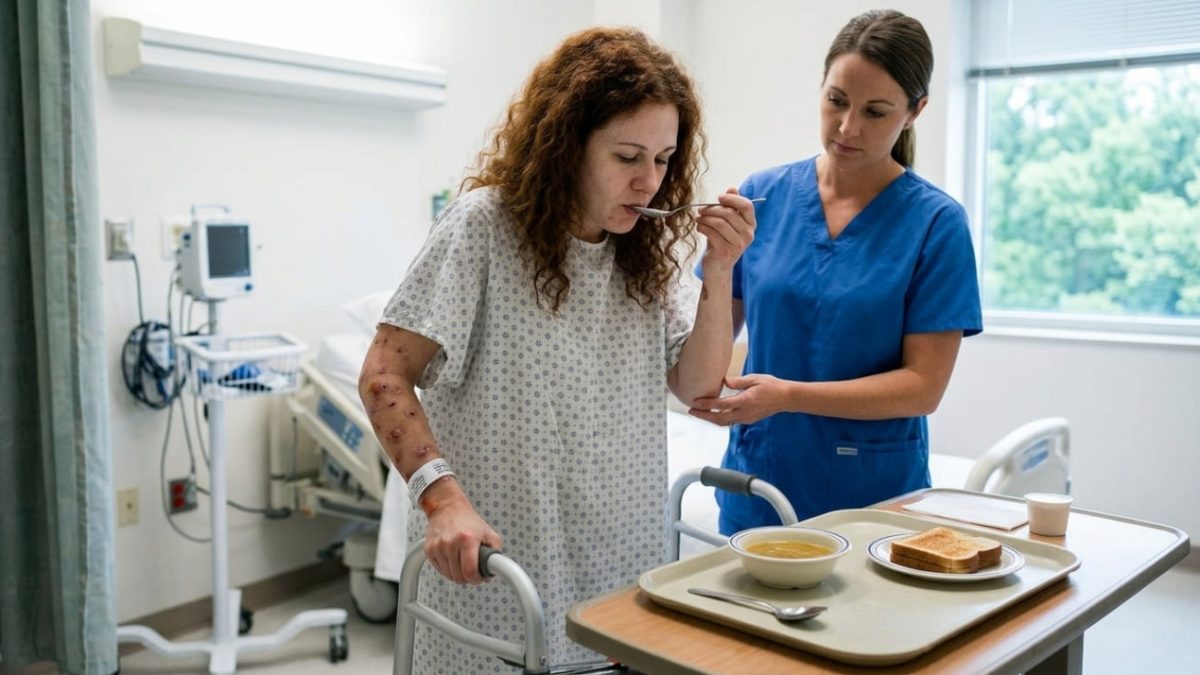
- Christa Pike is sitting up, walking with assistance, and eating in a hospital after surviving a failed lethal injection in Tennessee.
- Pike survived two doses of pentobarbital after a catheter failure caused the drug to pool in tissue instead of her bloodstream.
- Governor Bill Lee paused Tennessee executions for the rest of the year and launched an independent review following the incident.
Specialists and court records indicate an IV catheter failure caused pentobarbital to pool in muscle and tissue rather than circulating in her bloodstream. Execution personnel failed to detect that the IV lines were improperly seated.
Was this useful? Share your thoughts in the comments
 Hot right now
The Brutal Weaponry Used Against Colleen Slemmer in Infamous Knoxville Murder
Christa Pike is sitting up, walking with physical assistance, and eating meals in a hospital room after surviving Tennessee‘s attempt to execute her by lethal injection. The 50-year-old inmate survived two full doses of pentobarbital during the September 30 execution attempt, waking up from an induced state that initially left her unconscious and hooked to a mechanical ventilator.
Her initial steps began late Wednesday and expanded on Thursday as physical therapists supported her limited movement around her room. Pike is also beginning to regain basic mobility in her arms and has managed to swallow solid food for the first time since the procedure failed. While her immediate physical survival has surprised attending staff, her long-term medical stability remains precarious as clinicians monitor cognitive deficits and internal damage.
From the Ventilator to Independent Movement

Pike’s transition from critical intensive care to taking steps marks an unexpected shift in a case that halted capital punishment across Tennessee. After remaining comatose for several days, she regained consciousness on Tuesday and spoke her first words, asking attending staff, “Where am I?” and “Who are you?” Defense attorney Randy Spivey confirmed that her sudden return to consciousness caught both the legal team and medical personnel off guard.
“To everyone’s surprise — including mine, her legal team, and the medical team — Christa woke up and started talking.”
Despite her ability to stand and communicate, her medical team reports that Pike continues to battle severe secondary conditions. The chemical trauma left her with chemical burns and blisters across her arms, a localized blood clot, and acute pneumonia. She struggles with memory retention, confusion, and sustained focus, leading physicians to caution that her complete neurological and physical prognosis will take weeks to fully evaluate.
What Caused the Procedure to Fail
Lethal injection protocols rely on swift systemic delivery through direct intravenous access, yet Pike’s procedure deviated drastically from state expectations. Medical specialists and lethal injection monitors point toward a catastrophic IV catheter failure, suggesting the pentobarbital pooled directly into muscle and subcutaneous tissue rather than circulating through her bloodstream. Pike’s legal team filed formal court records stating that the execution personnel failed to detect that the IV lines were improperly seated.
Witness accounts describe a protracted ordeal. Approximately five minutes after the protocol commenced and Pike stated she was at peace, she lifted her head from the gurney and complained of severe pain in her arm. She eventually lost consciousness but continued heavy, labored breathing for nearly 90 minutes before prison authorities cleared media witnesses and summoned emergency medical transport.
Myth vs. Reality: Lethal Injection Reliability
A widespread assumption persists that intravenous lethal injection functions as a failsafe, instantaneously painless medical event. Reality demonstrates that when peripheral venous access fails, high-potency sedatives behave like caustic irritants in soft tissue, creating severe chemical burns, severe swelling, and extreme physical agony without delivering the intended lethal dose to the cardiac and central nervous systems.
| Clinical & Legal Metric | Current Case Finding |
|---|---|
| Mobility Status | Taking limited, assisted steps in hospital room |
| Respiratory Condition | Removed from ventilator; being treated for pneumonia |
| Lethal Agent Administered | Two doses of pentobarbital |
| Soft Tissue Injuries | Extensive blistering, chemical burns, and blood clotting |
| State Capital Operations | Executions paused; independent review ordered |
Legal Clashes and the Fight Over Commutation

The medical crisis has triggered immediate legal fallout across Tennessee’s judicial system. Governor Bill Lee ordered an immediate pause on executions for the remainder of the year and launched an independent review of state correctional procedures, while the state prison commissioner submitted an official resignation.
“While her physical recovery has been remarkable, significant questions remain about the long-term effects of what she endured. Christa is dealing with the profound psychological trauma of having survived a failed execution, including the terror, pain and uncertainty of believing she was about to die.”
Pike was sentenced to death in 1996 for the 1995 murder of classmate Colleen Slemmer, placing her on path to be the first female inmate executed in Tennessee in more than two centuries. Now, her defense team is preparing formal petitions requesting that Governor Lee commute her death sentence directly to life in prison without parole, arguing that subjecting an inmate to a second execution attempt breaches constitutional protections against cruel and unusual punishment. Deputy Attorney General Will Ayers declined to confirm in Davidson County court whether the state will petition for a renewed death warrant.
💡 The legal battle surrounding Pike’s failed execution sets up an unprecedented constitutional test regarding whether the state can issue a second lethal injection date.
🔍 Tennessee corrections authorities continue their internal review into lethal injection line placement protocols while the state execution schedule remains officially frozen.
📌 Share your thoughts in the comments below on whether surviving an execution attempt warrants an automatic commutation to life imprisonment.