
Christa Pike Survives Botched Lethal Injection in Tennessee After Two Doses

 Latest Updates & Appeals
Christa Pike Survives Botched Lethal Injection in Tennessee After Two Doses
AI-generated summary. Quality and accuracy may vary.
Photographs of Colleen Slemmer are displayed outside the Riverbend Maximum Security Institution in Nashville, Tennessee, ahead of the scheduled execution of Christa Pike. The display honors the 19-year-old victim who was murdered in 1995.
- Christa Pike survived two lethal injection attempts using pentobarbital during a failed execution on September 30 in Tennessee.
- Governor Bill Lee paused all state executions through the end of the year following the unprecedented procedure failure.
- Pike remains hospitalized under guard with severe arm trauma and cognitive fog while her attorneys seek a life sentence.
Christa Pike survived two doses of pentobarbital, suffering severe arm injuries and cognitive fog during the procedure. Tennessee halted all executions through the year's end while Pike's attorneys petition to change her sentence to life in prison.
Was this useful? Share your thoughts in the comments
 Hot right now
Christa Pike Execution Date Halted: How a Botched Lethal Injection Upended Tennessee Capital Punishment
Hot right now
Christa Pike Execution Date Halted: How a Botched Lethal Injection Upended Tennessee Capital Punishment
Death row inmate Christa Pike survived two lethal injection attempts during an unprecedented execution failure on September 30 in Tennessee, an event that has halted capital punishment across the state and reopened wounds for a grieving family waiting nearly 30 years for resolution. The 50-year-old inmate remains hospitalized under guard with severe arm injuries while state officials, defense attorneys, and lawmakers navigate an uncharted constitutional crisis.
The lethal injection procedure involving pentobarbital failed to end her life despite two separate doses administered in the death chamber. Legal experts have noted that surviving a completed lethal injection procedure represents an unprecedented development in modern American capital jurisprudence, immediately shifting the focus from finality to administrative accountability.
While the state deals with systemic fallout, the botched procedure has forced attention back onto the brutal 1995 Knoxville murder that put Pike on death row in the first place.

Portrait of Colleen Slemmer.
The 1995 Knoxville Crime Behind the Death Sentence
The victim, 19-year-old Colleen Slemmer, was an ambitious Florida native seeking a fresh start through the federal Job Corps training program in Knoxville, Tennessee. Slemmer enrolled in the vocational program specifically to acquire computer skills and career certifications to establish financial independence.
Her path crossed with then-18-year-old Pike and Pike’s 17-year-old boyfriend, Tadaryl Shipp. Hostility quickly erupted inside the dormitory facilities when Pike developed an unfounded suspicion that Slemmer intended to pursue a romantic relationship with Shipp.
On January 12, 1995, that hostility escalated into a fatal ambush. Pike and Shipp lured Slemmer into a secluded wooded area adjacent to the University of Tennessee campus under the pretext of resolving their interpersonal conflict peacefully.
Once isolated, the pair subjected Slemmer to prolonged physical torture and beatings. Pike delivered the fatal trauma by crushing Slemmer’s skull with a piece of asphalt. Slemmer died at the scene, leading to the rapid arrest and subsequent trial of both teenagers.
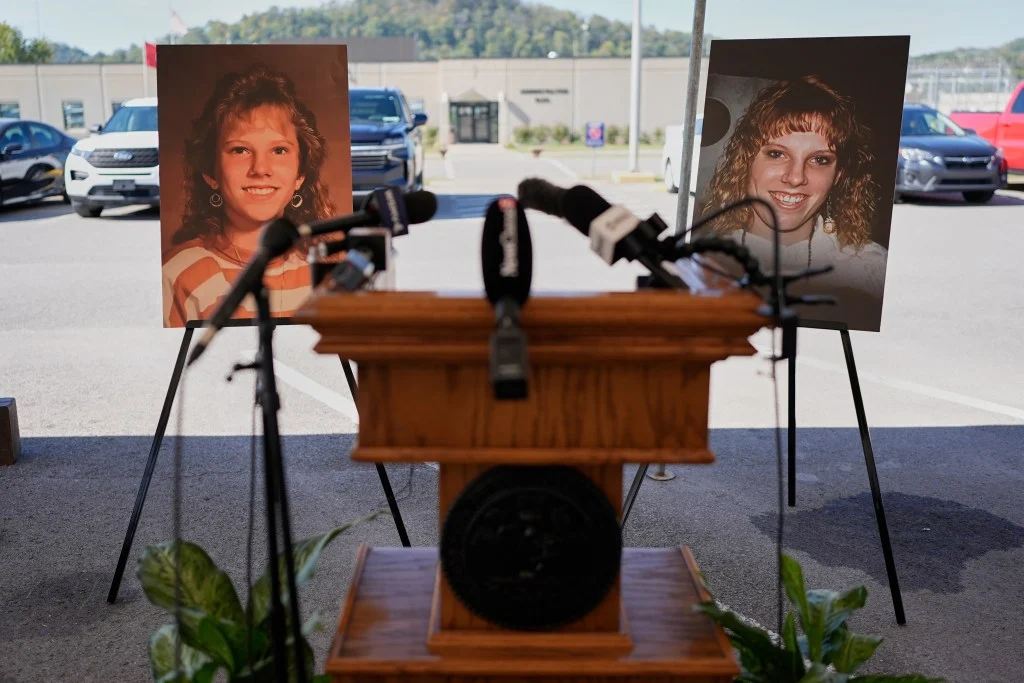
Photographs of Colleen Slemmer displayed outside Riverbend Maximum Security Institution before the planned execution of Christa Pike in Nashville, Tennessee.
Differing Sentences for Co-Defendants
While Pike received the death penalty, Shipp avoided capital punishment entirely because he was legally a juvenile at the time of the crime. Shipp received a life sentence with parole eligibility and remains incarcerated in state prison.
Pike became one of the youngest women ever sentenced to death in the United States, remaining on Tennessee’s death row for decades as post-conviction appeals moved through state and federal appellate courts.
Mother’s Decades-Long Wait Ends in Frustration
For Colleen Slemmer’s mother, May Martinez, the failed lethal injection marks another agonizing disruption in a three-decade quest for legal resolution. Martinez has spent almost 30 years speaking publicly on behalf of her daughter, regularly demanding the enforcement of Pike’s original sentence.
Following the failed September 30 execution, Martinez condemned the state’s handling of the procedure as a complete operational failure. In an interview with NBC News, she vented the deep anger stemming from the denial of closure.
“I want to go kill Christa. How’s that?”
Martinez explained that decades without her daughter have left permanent voids during major family milestones. She noted that the absence of Slemmer during holidays, birthdays, and Mother’s Days remains an enduring punishment for the surviving relatives.
Speaking to local NBC affiliate WBIR, Martinez stated she had maintained a premonition that the execution would not conclude successfully. She expressed deep skepticism that state corrections officials will ever muster the legal clearance or ability to schedule a second execution date.
Medical Fallout Inside Pike’s Hospital Recovery
Pike is believed to be the only person to have survived a full execution attempt carried out via lethal injection. Her defense attorney, Stephen Ferrell, reported that Pike is currently ambulatory within her secure medical ward while dealing with significant chemical and physical trauma.
“I think it’s kind of good and bad. Good that she is fairly with it, but she’s also somewhat foggy. She can lose her train of thought really easily and forgets where she’s going.”
Ferrell confirmed that Pike’s arms suffered extensive trauma during attempts to establish and maintain intravenous access for the two doses of pentobarbital. Pike currently possesses severely limited functional use of both arms due to the deep vein punctures and localized swelling sustained during the prolonged execution attempt.
The Administrative and Legal Crisis in Tennessee
The unprecedented survival of an inmate during lethal injection has triggered immediate administrative reckonings across multiple branches of the Tennessee state government. Governor Bill Lee ordered an immediate pause on all state executions through the end of the calendar year to allow comprehensive protocol investigations.
The state corrections chief tendered their resignation directly following the incident, signaling institutional fallout at the highest executive levels of the correctional system.
| Case Element | Current Operational Status |
|---|---|
| Christa Pike Medical Status | Ambulatory; cognitive fog and severe arm trauma after two pentobarbital doses |
| Tennessee Execution Schedule | Halted for the remainder of the calendar year by Governor Bill Lee |
| Department of Correction Leadership | Prisons chief resigned following the September 30 incident |
| Chamber Physical Evidence | Preserved under strict court order by Judge I’Ashea Myles |
| Defense Motion | Seeking modification of sentence to life in prison without parole |
| Legislative Reaction | Calls by Senator Marsha Blackburn to reinstate the electric chair |
Presiding Judge I’Ashea Myles issued a strict preservation order compelling the Tennessee Department of Correction to secure all physical evidence from the death chamber. The preserved items include intravenous lines, syringes, fluid bags, and related medical waste, establishing crucial evidence for imminent civil rights and cruel-and-unusual-punishment litigation.
Pike’s legal team is actively petitioning to convert her capital sentence into life imprisonment without parole, arguing that submitting an inmate to repeated execution attempts violates the Eighth Amendment. In sharp contrast, capital punishment supporters have demanded swift statutory remedies. U.S. Senator Marsha Blackburn publicly pushed for alternative execution protocols, calling for the return of the electric chair.
When questioned in court regarding the state’s future procedural strategy, the Tennessee attorney general conceded that prosecutors do not yet know whether the state will attempt to execute Pike again.
💡 The legal consequences of this unprecedented execution failure will influence capital punishment protocols and constitutional litigation across the United States for years to come.
🔍 How should the legal system resolve failed execution procedures when constitutional boundaries are tested?
👇 Leave your thoughts in the comments below and join the discussion on capital justice.
Source: www.the-sun.com